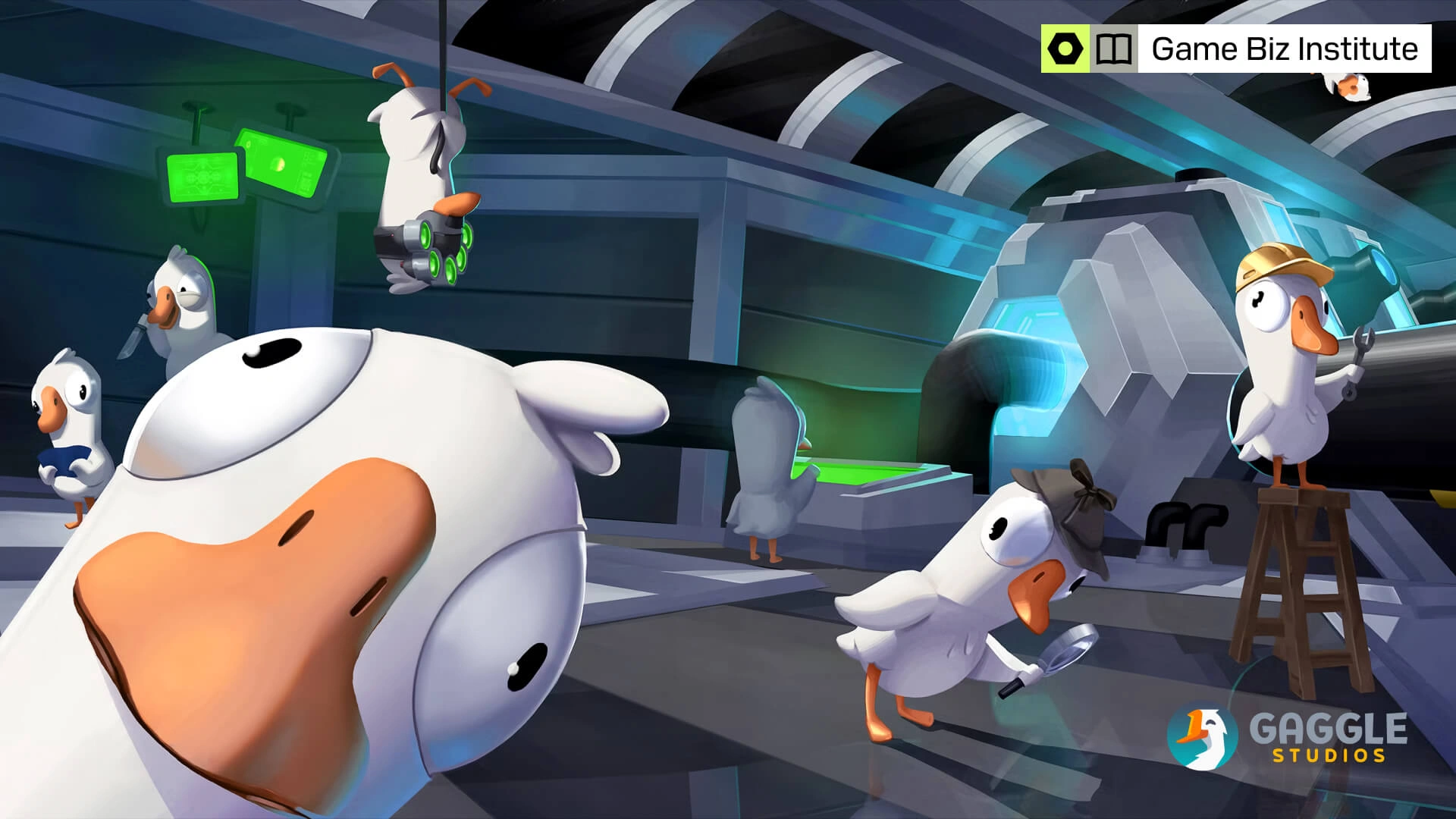
Gaggle Studios reveals how they built a party gaming hit and what the game industry can learn from Goose Goose Duck's trajectory.
When COVID shut down our escape-room business, I didn't try to scale up. I stayed small. Five years later, that still looks like the right call. When the location-based entertainment industry went dark overnight, most founders I knew started looking for a lifeline. I went looking for a gap instead.
My co-founders and I didn't come from games. We came from escape rooms and physical, in-person experiences. When that whole industry shut down in early 2020, we had to move fast or fold. So we looked at what people were suddenly trying to do online, and where it was breaking.
What we saw was a real problem. People who had never thought of themselves as gamers were trying to play with friends, and the tools weren't built for them. If you wanted a game of Among Us with your group, you had to download Discord, manage the lobby, fight off hackers, and invent your own rules for everything the game didn't handle. I had spent years around tabletop communities in China and Canada, so I knew what social play was supposed to feel like, and this wasn't it.
So we set out to solve it. That meant building in the voice chat, the player networking, and everything else, so the whole thing just worked. You didn't need to download anything. You didn't need to call a friend to figure out how to connect.
The most effective community-building tactics for an indie social game studio are early transparency, consistent player access, and giving the community meaningful ways to shape the game. The strongest studios build around Discord, creator-friendly content, regular playtests, visible roadmaps, and engagement that makes players feel like they are part of the studio’s journey rather than just an audience. Social games with strong communities usually share the same developer relations pattern: they communicate often, listen visibly, act on feedback, and treat players as collaborators without surrendering creative direction. They make the community feel safe, active, and consequential.
That was the founding idea for Gaggle Studios. We became the small Toronto team behind what grew into the world's largest social deduction game. None of it was a grand plan; it was a gap and a deadline.
The Cultural Insight That Sharpened Everything
The piece that focused us was cultural. In many Asian markets, social deduction games like Werewolf and Liar's Dice aren't niche hobbies; they're closer to what Monopoly or charades are in North America. They're simply what you play when friends get together: a game built around bluffing and reading the room was always going to travel well there.
When we paired that insight with a decision to make the game free, something happened that we hadn't fully planned for. Whole communities came over at once.
We would rather walk into a 40-person stream and get all 40 people than walk into a 4,000-person stream, pay a lot of money, and maybe convert 5%.
Free is a Philosophy, Not a Tactic
Making the game free wasn't really a pricing trick; it was a statement about what the game was for.
In social games, one person who doesn't want to pay can pull the whole group down. I had seen the same thing in escape rooms. If one person in your party thinks the ticket isn't worth it, you lose the entire booking. Going to zero removed that friction completely: downloads spread, and the communities followed them.
But "free" came with a rule attached. We committed early to never locking content behind a paywall. New maps, new characters, and new modes are available to every player. The only thing we sell is cosmetics, which are really just ways for people to express themselves inside the friend groups they're already building.
The game never asks you to spend money. There's almost a goodwill between the developer and the player.
That goodwill turns out to be worth real money. Players who feel the game treats them fairly stick around longer, and when something genuinely cool shows up in the store, they buy it without being pushed.
We also stay away from the model that much of free-to-play leans on, where a handful of huge spenders carry the economics and everyone else rides along for free. We would rather have a healthy base of players who each spend a little than have 100 people holding up the entire game, because relying on the whales felt too risky to us.
Community is the product
Five years in, we keep relearning the same lesson. What brings players back isn't new content. It's their friends.
The game started as a social deduction experience, but it turned into something closer to a shared space. Friend groups come back to it. New connections form across languages and borders. The game is more of a meeting place than a destination. It reminds me of how people talk about early World of Warcraft. The raids mattered, but what stuck with you were the people you ran them with.
Our game does some of that. It gives people the same kind of social connection. With translation tools, a player can now team up with someone in Korea, and we're seeing that happen more and more.
Here is something that surprised us. We push out as many as 50 content updates a year, including new roles, maps, and interactions. We used to assume those updates were what brought lapsed players back.
They matter less than we thought. What actually decides whether someone returns is whether their friend group is still around. The game is the excuse. The community is the reason.
The highest-leverage thing you can do is design for the clip before you design the campaign. Look at how Among Us blew up. It launched quietly in 2018 and spent two years as a modest mobile success that nobody on Twitch had noticed. Then in July 2020 Sodapoppin played it on Twitch, other big streamers piled in behind him, and within weeks it was one of the most-watched games on the platform. Nobody bought that. What made it spread was that the game throws off dramatic, clippable moments on its own: someone lies to your face, the wrong player gets voted out the airlock, the whole table erupts. If your best thirty seconds is fun to watch with the sound off, your players quietly become your camera crew. You see the same thing on Roblox today, where the developer behind a hit like Steal a Brainrot grew a following partly by running chaotic, meme-able live events that creators are desperate to film. You can't manufacture virality. You can manufacture the raw material for it.
You can't manufacture that with ad spend, and we didn't try. Instead, we seeded it by working with small, community-focused Twitch streamers, the kind with a few hundred followers rather than tens of thousands. At that size, converting the whole room is realistic, and the enthusiasm is genuine rather than bought.
Staying small on purpose
At one point, a well-funded investor was ready to write us an eight-figure check. I walked away from it.
There is a massive gap between running an indie studio and running a corporate enterprise. You have to ask whether that's really what you want in your company's DNA, and whether you're willing to rewrite how you work to get there. We decided we weren't.
So we stayed lean. Today, we're around 30 people, and with AI tools speeding up production, we can move on a new idea in days. We don't need board meetings to change direction. There's no sunk-cost pressure forcing a bad idea to keep going.
We can put an entire project on hold without holding a meeting. If we see an opportunity, we can move on it in days, and drop it just as fast if it doesn't pan out.
I think that kind of agility matters more right now than size. The tools for making games have gotten cheaper and widely available, and AI has sped everything up. A focused team of 30 skilled generalists, people who are great at one thing and capable at everything else, can compete with studios ten times their size. The ones who will struggle are locked into AAA cost structures with no room to turn.
Market outlook
I'll be honest about the state of distribution in 2026. Roughly 18,000 games come out on Steam every year, and the way games get discovered rewards momentum more than quality. That means money and social-media manipulation often matter more than whether the game is actually good.
Here's my prediction: The platform either filters itself or it chokes.
I think we'll see Steam bring that 18,000 down to something more manageable, maybe 3,000 to 5,000. It'll go back to being a store instead of a flea market.
For developers who make it through that filter, I see a real opportunity in the space that opened up once the tools were easier to use. The edge now isn't being able to build, because almost anyone can build. The edge is being able to come up with the idea.
I think the value of strong IP will climb, and familiar IP will be worth more than a brand-new game. The sweet spot is a novel idea applied to mechanics that people already understand.
The games that get repeat coverage aren't necessarily the most updated, they're the ones where no two sessions feel the same because the social dynamics shift. Different players, different roles, different outcomes. A creator can return to the same game twenty times and each stream is its own story because the content is being generated by the people in the room, not by the game itself. That's what keeps it fresh for their audience, and what keeps the creator reaching for it over something new.
That's where the low-hanging fruit is for indies. I point to Balatro as the model. Take something everyone knows, like poker, drop it into a structure gamers recognize, like a roguelike card game. You get something that feels instantly familiar but plays like nothing else.
If I had to give one piece of advice to any developer right now, it would be to resist two temptations. Don't scale too fast, and don't pay for excitement.
Never pay someone to get excited about your game.
The reason is structural: Gaming influencers aren't like food bloggers, and your viewers can see the gameplay with their own eyes. If the excitement on screen doesn't match the game, they'll know.
The throughline is restraint
When I look back at the last five years, the thread running through it all is restraint: Stay lean, give more than you take, build for the whole group, not just the few big spenders, and let the community do the work that marketing can't. Five years in, we're still standing, and still small on purpose.
Interviews, copywriting, editing, and article publication prepared by Kirill Tokarev, Lisa Sirlin-Hall, Viktoria Steshina, and David Jagneaux.
At Xsolla, we work behind the scenes so studios like Gaggle can stay focused on making something worth a player's time. To explore all the things your game needs to grow, monetize, and reach players wherever they are, contact Xsolla expert.
Talk with an Xsolla expert
Learn how Xsolla’s video game monetization experts can help accelerate your business. Xsolla is a global video game commerce company with a robust set of tools and services designed specifically for the game industryLearn how Xsolla’s video game monetizationexperts can help accelerate your business. Xsolla isa global video game commerce company with arobust set of tools and services designedspecifically for the game industry.
By submitting this form, you consent to receive the digital guide.You can unsubscribe at any time. For more information, please read our Privacy Policy.
How to solve the investment problem for mid-tier AA games
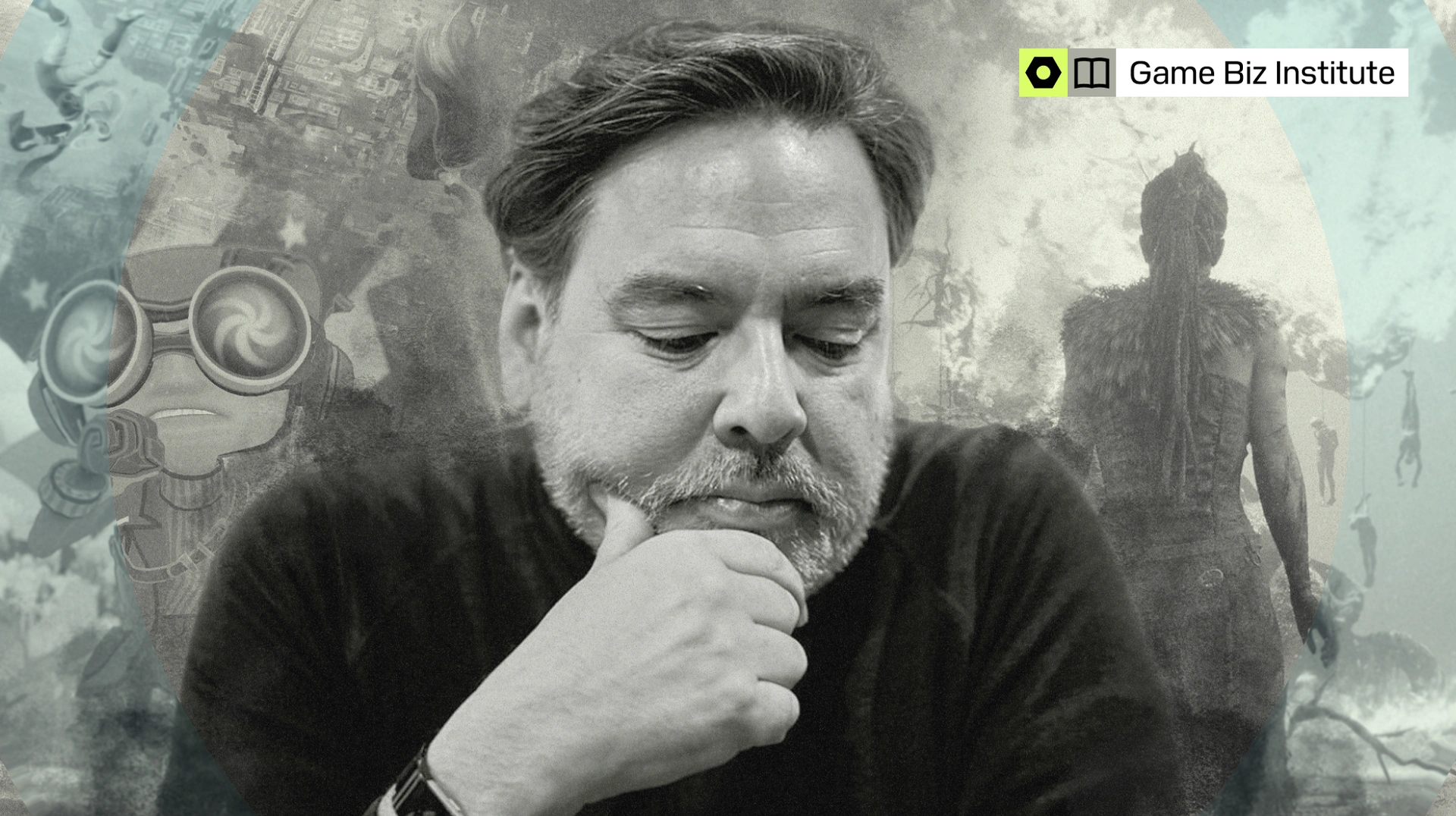
Shawn Layden is building a financing vehicle for stranded AA games. The teams keep their IP. The hard part is that nobody knows how to underwrite a video game.
Brian CrecenteEditorial consultant to the video game industry
SEPTEMBER 14, 20266 MIN
Proactive, not reactive: 24 years of keeping games online
The calm game launch is never luck; it's the result of work you do long before release day.
The players you already have are your biggest growth opportunity
Adikteev's Emilien Eychenne knows that your biggest game growth lever isn't new installs; it's learning to spot churn early and win mobile players back for good.
The trust gap: why Asian players abandon your checkout
Xsolla research across Asia reveals a consistent pattern: players do not abandon carts because of price; they leave because the checkout feels foreign. Here is what it takes to earn trust at the moment of purchase.
How game discovery actually works, and fails, in 2026
Distribution got democratized. Discoverability got concentrated. GAM3S.GG Head of Operations Eliza Crichton-Stuart speaks out on what that gap means for players and developers, and how to close it.
Virtual worlds were supposed to let players be themselves, but monetization forgets that
MUD1 co-creator Richard Bartle reflects on the origins of virtual worlds, the player-developer contract, free-to-play, pay-to-win, Web3, and why lasting MMOs need purpose before monetization.
Richard BartleGame Design Professor, University of Essex
AUGUST 13, 20266 MIN
What 15 years of game partnerships taught me
After 15 years and 170M downloads of Magic Jigsaw Puzzles, ZiMAD's Chief BD Officer shares how to protect player trust and lead through fast change.
GDAI's Program Director, Machaiah Kalengada, dives into the unique combination of India's 550 million young gamers and an industry ready to build its own IP. He reveals what's really happening in India's booming game development scene.
Andrew Naicker of Skystone Games has spent 14 years watching the "ship faster, market louder" playbook fail. Here's what he actually builds and what it takes to launch in 2026.
Entertainment licensing isn't a AAA-only game anymore. Xsolla Agency global IP licensing advisor Mark Caplan discusses how mobile studios are sitting on one of the best growth levers in the industry and most aren't using it. Here's what developers get wrong and how the right partner changes everything.
Mark CaplanGlobal IP licensing advisor, Xsolla Agency
AUGUST 13, 20269 MIN
The attention economy: how games win mind share in 2026
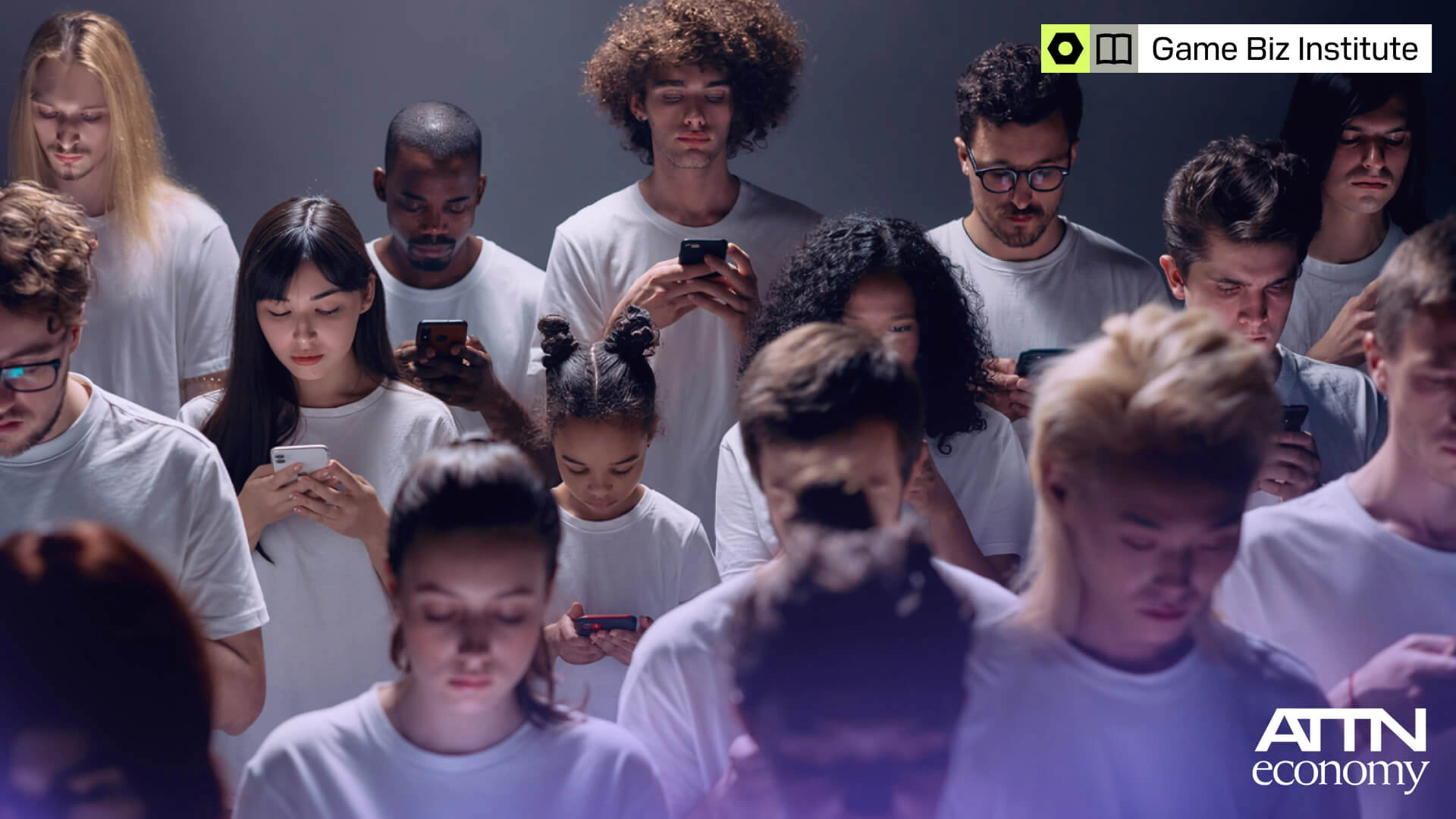
Players have more to watch, play, and scroll through than ever. They have less time to give any of it. Lexi Sydow, founder of The ATTN Economy, explains why that gap is the real battleground for every game in 2026.
Lexi SydowChief Analyst & Founder, The ATTN Economy
AUGUST 13, 20266 MIN
What keeps a game running for 24 years?
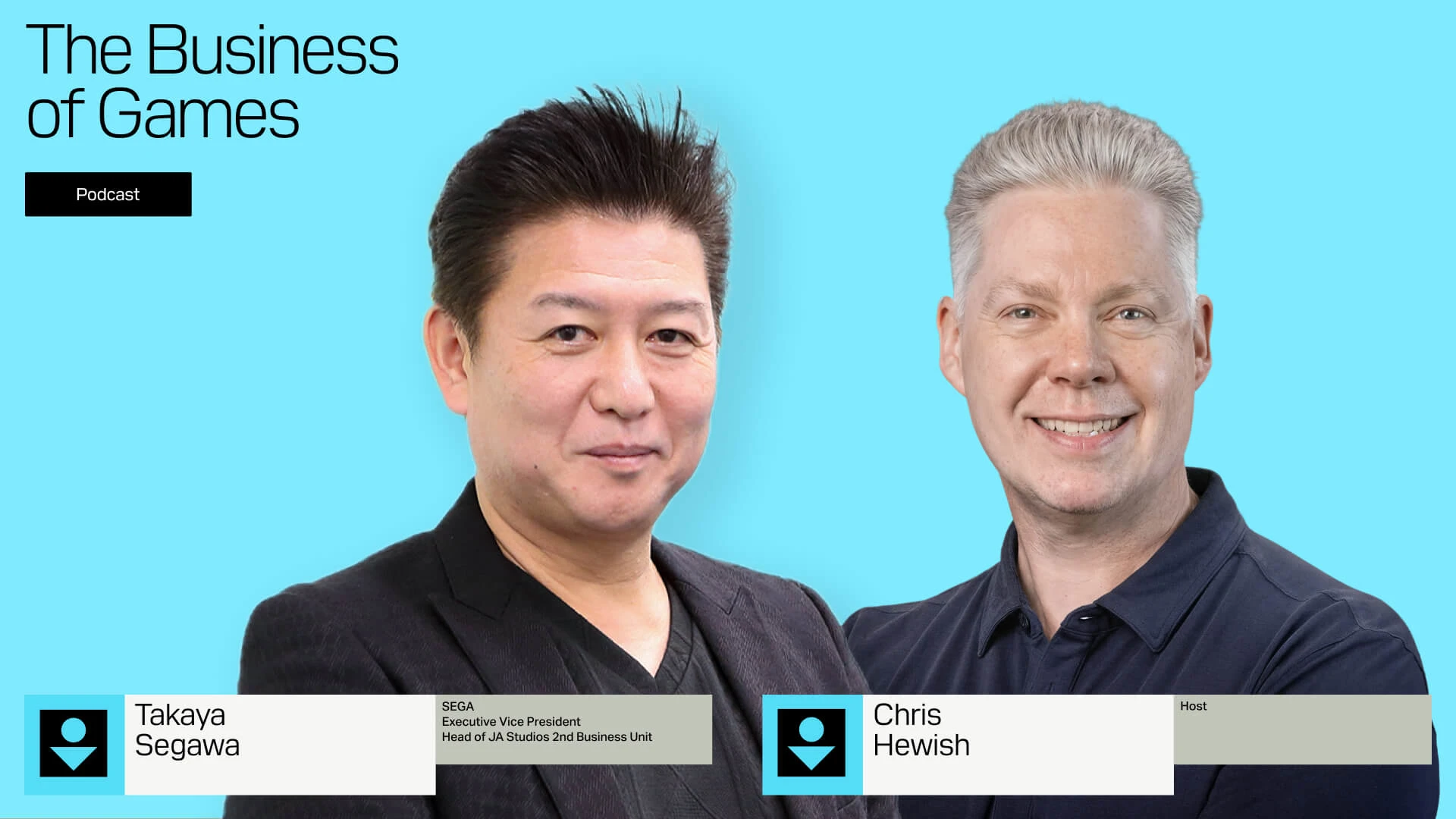
Sega's head of development studios on LiveOps, global growth, and going direct to players.
Are you a game industry expert with insights that inform? Help us grow Game Business Institute and earn revenue for contributions that have direct impact.
Game Biz Institute
The game industry's most extensive library of business insights.


-800x800.webp)


.jpg)
.jpg)
.jpg)
.jpg)
.jpg)
-808x789.webp)
-1920x1080.webp)
-1920x1080.webp)

-1920x1080.webp)
-1920x1072.webp)
-1-400x400-400x400.webp)
-501x501.webp)
-500x500.webp)


-2-1920x1920.webp)