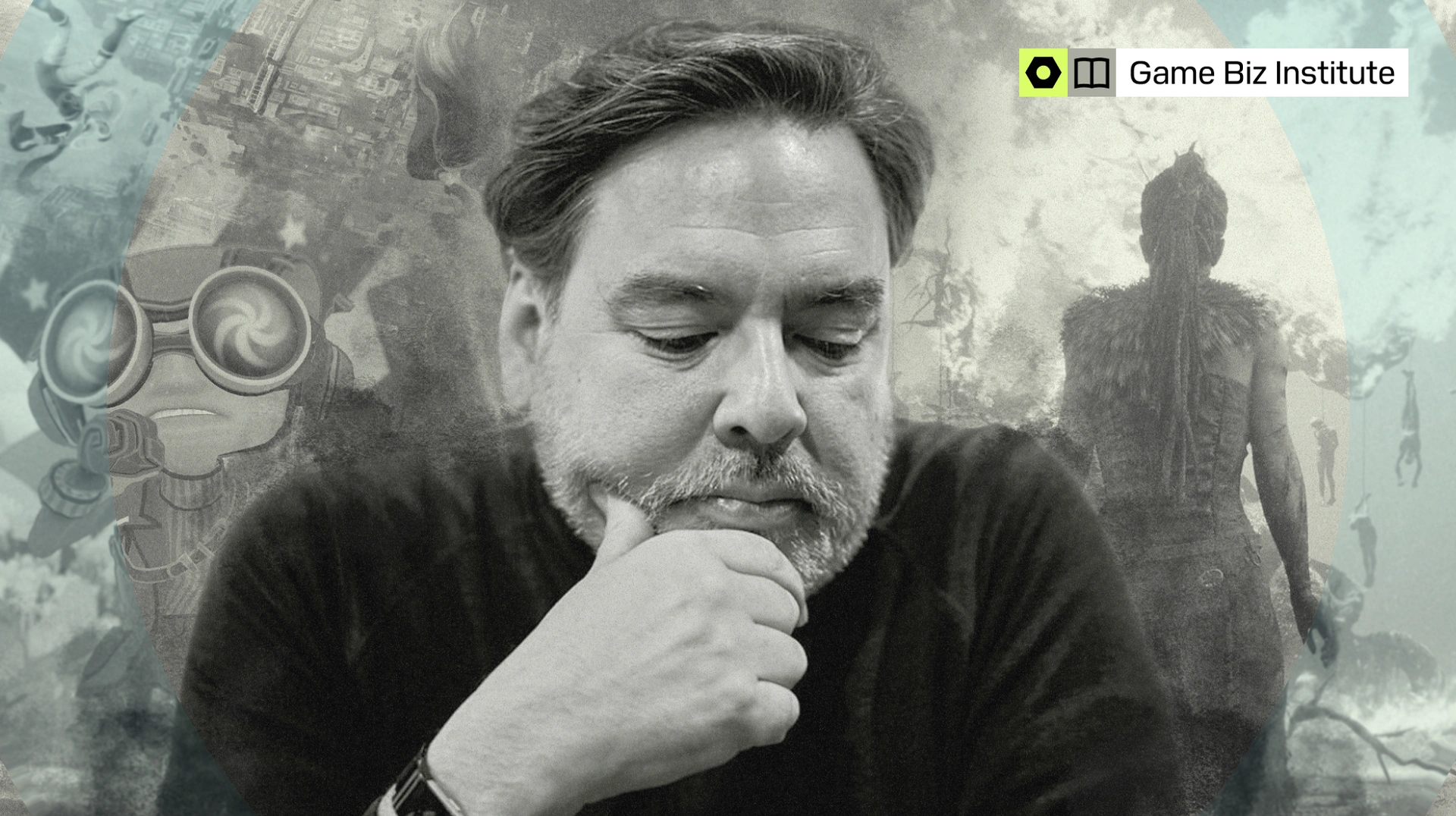
Shawn Layden, former PlayStation Studios boss, is building a financing vehicle for stranded AA games. The teams keep their IP. The hard part is that nobody knows how to underwrite a video game.
Early last year, former PlayStation Studios boss Shawn Layden walked into one of the largest investment banks in the country with six partially built games and asked for a triple-digit-million-dollar financing package to finish them.
Instead of saying yes, the bank offered to double the investment. So Layden turned them down. He told them that extra money wouldn’t buy a better outcome.
That refusal is the thinking behind Layden’s latest venture, and at first blush, it seems like a simple idea: Completion financing for video games. But it comes with a big ask from both financiers and game makers: More discipline.
The COVID fattening
In the three and a half years before Layden started building this, more than 40,000 people lost their jobs in the video game industry. Many came alongside studio closures that stranded games deep in production.
Layden's idea was born of how unusually deep those layoffs cut, and how many of them hit people in the process of making a game, not just when a shipped game didn't do well. (Recently, the quality of a shipped game seems to have done little to dissuade layoffs.)
Hellblade: Senua’s Sacrifice (2017) by Ninja Theory
Closing a studio has always happened. They start, they close. But typically, they close because they've shipped one or two or even three games that didn't make their nut. So after so many rolls of the dice, you just gotta say, 'Look, this isn't happening, so thanks, goodbye.' And people kind of understood that.
But that seemed to change after what Layden calls the "COVID fattening," a period of time when the game industry was seeing double-digit year-on-year growth, and developers were going on hiring sprees. But once the peak impact of COVID passed, people were playing fewer games and, Layden said, the companies that had fattened up had to slim back down.
People started shedding teams because, sadly, headcount is always the first tool that the executive uses in trying to balance the books. And not only were members who would be part of the natural attrition seen throughout the industry being released, but now entire teams are being released, entire studios are being closed, which have a game in development.
And those games are often deep into development, 20-35% complete.
The company goes, 'We can't pay for the completion,'" Layden said. "We don't have a vision for what the game's supposed to do once it gets done, so goodbye.
The result is entire teams, some of them with access to the source or being granted control of the source for their in-development games as part of their separation agreement.
Clair Obscur: Expedition 33 (2025) by Sandfall Interactive
The proposed solution
Around the time the video game industry layoffs were hitting a peak in 2024, Layden and a friend got into a discussion about the issue.
We thought, you know, we need to come up with a mechanism that can help these teams get to completion. There's a concept of completion financing in film and television, which we looked at to see how we can learn from that model and find discrete financial resources to help these teams get to completion.
And Layden's hope is that this new endeavor would fall in line more closely with the old publisher-developer relationship, where a publisher would give money to a studio to finish the game, and then anything made after the game hits break-even is split with the publisher. The publisher supplies a milestone calendar, and the developer keeps control of its IP.
A big part of what Layden expects his team would be doing is not just finding financing but reeducating both financiers and game development studios about what to expect from the relationship.
We can go in there and help game teams understand what they're signing up for, but getting to keep their IP, and letting financiers understand that this is how you participate in interactive entertainment. This is what your expectations should be. Don't come in here saying, 'How are you going to beat GTA 6?' Because that's an insane thing to say.
That lesson comes, in part, from a pitch he made to a large investment bank early last year. The slate was in flux, with games moving in and out. Eight was the maximum. He pitched six.
He went in believing the hardest question was already answered.
We didn't even have the risk of greenlight because this stuff has been vetted. Smart people said these games were good to go. These studios were closed not because of any malfeasance or question about their product; it was just that their publisher could no longer manage the game.
So a lot of it was de-risked.
Pillars of Eternity II: Deadfire (2018) by Obsidian Entertainment
The bank’s response was to offer twice what he asked for. Layden turned it down.
The idea has a lot going for it, starting with Layden himself, who spent more than three decades working his way up Sony's corporate ladder from communications to chairman of Sony Interactive Entertainment Worldwide Studios. He left in 2019, and went on to serve as a strategic advisor for Tencent Games for nearly two years.
He also notes that the team working on this idea has more than 100 years of combined video game experience. And, of course, there's the current state of the industry. An industry that could use some help picking up the pieces.
While Layden isn't ready to discuss most of the details of this new endeavor, he did name one partner: Gabriel Pessah, who spent five years at PlayStation as senior director of strategy and corporate development and as Layden's chief of staff.
He was my right hand at PlayStation, and he built the strategy and architecture for this venture. Everyone else stays offstage until we announce.
Building a portfolio
Layden is also being selective about the kinds of games he wants to help find financing for. Specifically, they're mostly single-player narrative games. And Layden has a lot of experience judging a game's potential or seeing it judged by some of the best in the business.
In his mind, having discipline during the evaluation processes is key to the success of a game.
He saw that firsthand while working under Akira Sato, who helped form Sony Computer Entertainment Inc. in 1993. Layden said Sato had a rule not to speak during the monthly producer presentations so he wouldn't sway the room. He listened, and at the end he said one of three things.
Those three responses were "OK," "But where's the fun?" and "It's OK, but it doesn't smell like money."
When Layden started running Worldwide Studios, he also had a very straightforward rubric.
Because you're going to have [more than a dozen] studios around the world, you can't have a 19-page mission statement. So I just said three things: First, best, must.
PaRappa the Rapper (1996) by NanaOn-Sha
That means all games under Layden had to tick one of those boxes. Under that rubric, PaRappa the Rapper was a first, God of War was a best, and a must was supporting PlayStation's hardware decisions, like creating games for the PlayStation VR headset. "Because we support the platform," Layden said.
Nowadays, when Layden judges a game, he relies on three things that are super important to him: Character, story, and world.
Give me a world I want to live in, and then I'll play Tomb Raider, for example. People I talk to tell me that they miss finishing games. That they miss that endorphin rush of the final boss, defeated, roll credits, you know. And then sitting back and thinking, that was an amazing experience.
While the game industry is packed with live-service titles that can rack up millions of gameplay hours, Layden said his sweet spot is maybe 22 to 28 hours per game.
"They are quality hours," he said. "They are hours that you don't put the controller down. You're completely absorbed, and that's the kind of market I'm looking to go back to."
And while Layden calls himself a "console boy" and says he always goes back to the living room to have his gaming experience, he would like the games he finances to ship on PC too. Mobile is the only "pond" he doesn't swim in, he said.
Psychonauts 2 (2021) by Double Fine Productions
The underwriting problem
The harder question is how you underwrite any of it.
In film, the late-stage money used to close the gap between what a production has raised and what it needs to finish is called completion financing. The concept is a good match for gaming, but structurally, film production differs significantly from video game production.
Film's version works because of a second instrument, one that is standard practice in the movie industry: the completion bond.
A guarantor sells the lender a promise that the movie gets finished and delivered, typically for three to five percent of the budget, backed by a contingency in the budget itself. In exchange, the guarantor gets daily production reports and the contractual right to take the film over, including firing the director.
The bond is underwritable because a film has a locked script, contracted pre-sales that pay on delivery, and decades of performance history on the people running the set. Games have none of that. There is no locked script, no pre-sale that pays on delivery, and no meaningful way to take over a half-finished game and have anyone want to ship what comes out.
Layden knows it isn't a clean fit.
Film underwrites against pre-sold distribution and decades of actuarial history. Games have neither. So we underwrite forward-looking signals instead, and half of what we look at is old-fashioned, the things that have always made a great game: a story, a world, an ending and stuff we can measure, such as wishlists, playtest results, community growth, and what a team is doing to build that community in the first place. We release capital in stages as the evidence clears, on the development side and the community side. Budgets stay in AA territory with small teams.
Ultimately, the success of this endeavor will also come down to Layden and his team striking the right balance between a financier's need to control the timeline and a game developer's need for creative autonomy.
Gravity Rush 2 (2017) by Japan Studio
What’s next?
Details about Layden’s venture remain scarce. "I don't have a name, date, place, financial amount, those sorts of things," Layden said.
And when the official announcement for the venture will happen is not entirely clear, though Layden does have a self-imposed deadline of sorts.
I'm hoping by the end of the year, we'll either be able to tell a bit more about the story, or the fracturing of the game industry is going to be so significant that I don't have enough Band-Aids to make a significant improvement on it.”
It also hinges on creating something for video games that currently doesn’t exist.
Nobody has real underwriting tables for games,so we're building our own, one slate at a time.
Shawn Layden is a games industry veteran who spent more than 30 years at Sony, holding leadership roles across PlayStation in North America, Japan, and Europe before serving as Chairman of Worldwide Studios. He now works as an independent advisor, helping companies navigate the evolving global games and entertainment technology businesses.
Interviews, copywriting, editing, and article publication prepared by Brian Crecente, Kirill Tokarev, Lisa Sirlin-Hall, Viktoria Steshina, and David Jagneaux.
Talk with an Xsolla expert
Learn how Xsolla’s video game monetization experts can help accelerate your business. Xsolla is a global video game commerce company with a robust set of tools and services designed specifically for the game industryLearn how Xsolla’s video game monetizationexperts can help accelerate your business. Xsolla isa global video game commerce company with arobust set of tools and services designedspecifically for the game industry.
By submitting this form, you consent to receive the digital guide.You can unsubscribe at any time. For more information, please read our Privacy Policy.
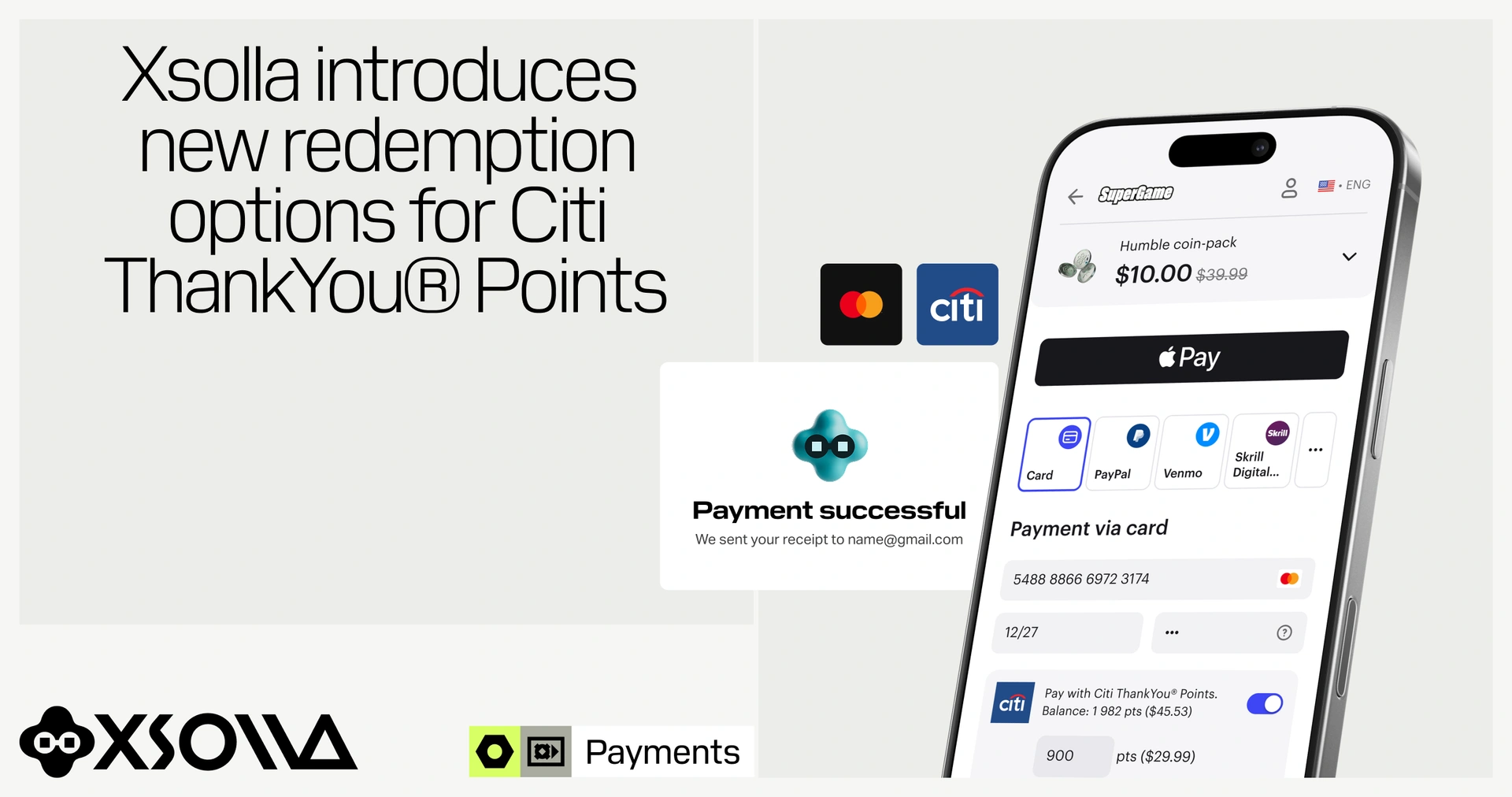
Eligible Citi Mastercard cardmembers can now use Citi ThankYou® Points on video games and in-game digital goods. Studios already using Xsolla Payments can offer points as a payment option without building or maintaining a separate loyalty integration.
How to solve the investment problem for mid-tier AA games
Shawn Layden is building a financing vehicle for stranded AA games. The teams keep their IP. The hard part is that nobody knows how to underwrite a video game.
Brian CrecenteEditorial consultant to the video game industry
SEPTEMBER 14, 20266 MIN
Proactive, not reactive: 24 years of keeping games online
The calm game launch is never luck; it's the result of work you do long before release day.
The players you already have are your biggest growth opportunity
Adikteev's Emilien Eychenne knows that your biggest game growth lever isn't new installs; it's learning to spot churn early and win mobile players back for good.
The trust gap: why Asian players abandon your checkout
Xsolla research across Asia reveals a consistent pattern: players do not abandon carts because of price; they leave because the checkout feels foreign. Here is what it takes to earn trust at the moment of purchase.
How game discovery actually works, and fails, in 2026
Distribution got democratized. Discoverability got concentrated. GAM3S.GG Head of Operations Eliza Crichton-Stuart speaks out on what that gap means for players and developers, and how to close it.
Virtual worlds were supposed to let players be themselves, but monetization forgets that
MUD1 co-creator Richard Bartle reflects on the origins of virtual worlds, the player-developer contract, free-to-play, pay-to-win, Web3, and why lasting MMOs need purpose before monetization.
Richard BartleGame Design Professor, University of Essex
AUGUST 13, 20266 MIN
What 15 years of game partnerships taught me
After 15 years and 170M downloads of Magic Jigsaw Puzzles, ZiMAD's Chief BD Officer shares how to protect player trust and lead through fast change.
GDAI's Program Director, Machaiah Kalengada, dives into the unique combination of India's 550 million young gamers and an industry ready to build its own IP. He reveals what's really happening in India's booming game development scene.
Andrew Naicker of Skystone Games has spent 14 years watching the "ship faster, market louder" playbook fail. Here's what he actually builds and what it takes to launch in 2026.
Entertainment licensing isn't a AAA-only game anymore. Xsolla Agency global IP licensing advisor Mark Caplan discusses how mobile studios are sitting on one of the best growth levers in the industry and most aren't using it. Here's what developers get wrong and how the right partner changes everything.
Mark CaplanGlobal IP licensing advisor, Xsolla Agency
AUGUST 13, 20269 MIN
The attention economy: how games win mind share in 2026
Players have more to watch, play, and scroll through than ever. They have less time to give any of it. Lexi Sydow, founder of The ATTN Economy, explains why that gap is the real battleground for every game in 2026.
Lexi SydowChief Analyst & Founder, The ATTN Economy
AUGUST 13, 20266 MIN
What keeps a game running for 24 years?
Sega's head of development studios on LiveOps, global growth, and going direct to players.
Are you a game industry expert with insights that inform? Help us grow Game Business Institute and earn revenue for contributions that have direct impact.
Game Biz Institute
The game industry's most extensive library of business insights.


-808x789.webp)


%20(1).jpg)
%20(1).jpg)
%20(1).jpg)
%20(1).jpg)
%20(1).jpg)
%20(1).jpeg)
-1-400x400-400x400.webp)
-1920x1080.webp)
-1920x1080.webp)

-1920x1080.webp)

-1920x1072.webp)
-501x501.webp)

-500x500.webp)




-800x800.webp)
-2-1920x1920.webp)