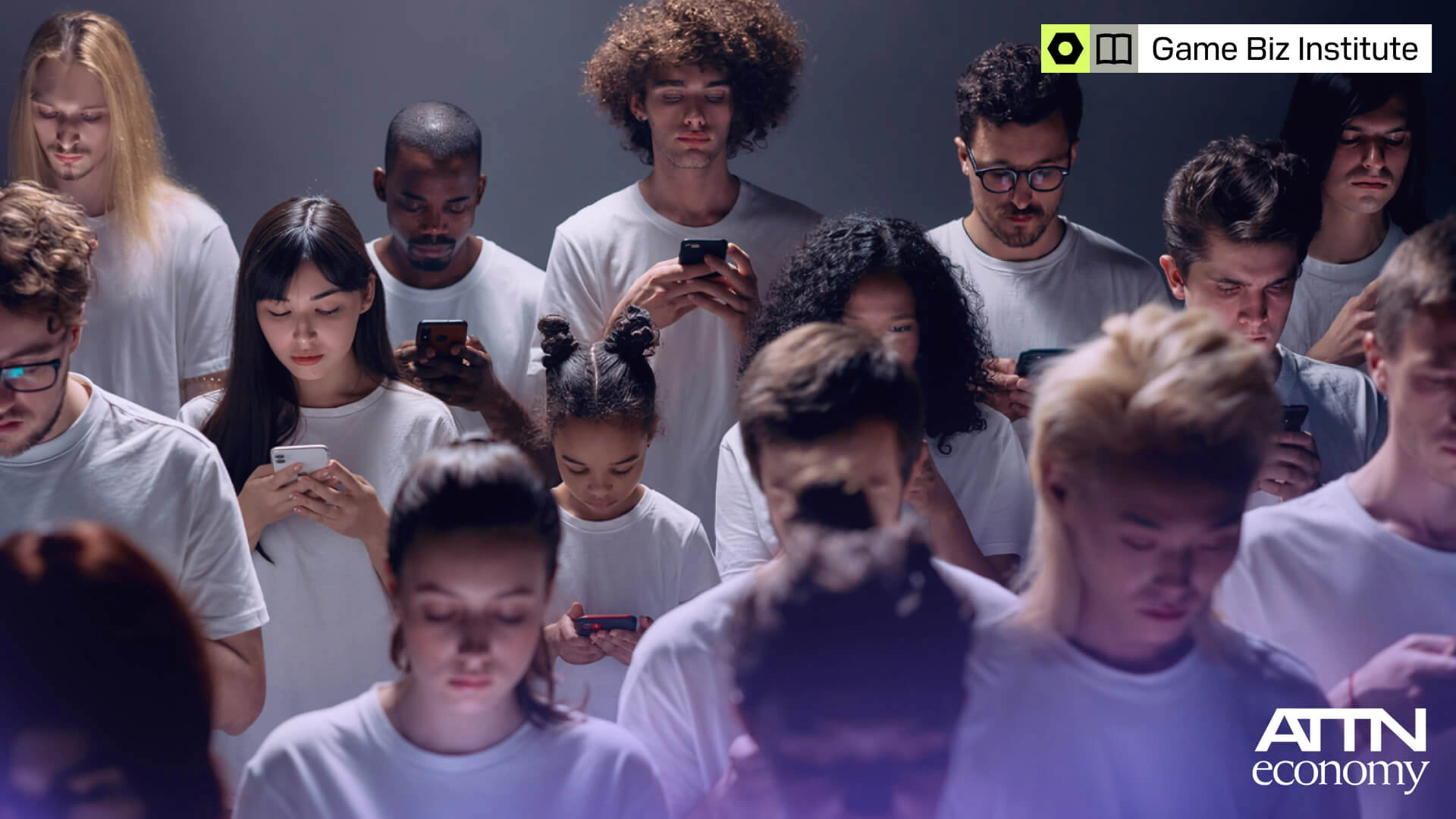
Distribution got democratized. Discoverability got concentrated. GAM3S.GG Head of Operations Eliza Crichton-Stuart speaks out on what that gap means for players and developers, and how to close it.
Distribution has never been easier. Anyone can ship a game to a global audience in an afternoon. Discovery has never been harder, because the same forces that opened the gates also funneled attention toward a handful of familiar names.
Eliza Chrichton-Stuart is the Head of Operations at GAM3S.GG, a platform building discovery infrastructure across a fragmented gaming ecosystem. Her team reaches over 2 million users and 400,000 monthly active players across traditional and blockchain gaming, and works with partners that include Google, Sony, Xbox, Ubisoft, Coinbase, and more than 400 studios. As part of an ongoing Games Business Institute conversation about how players actually find games, we asked her to explain what discovery looks like from the inside.
When people picture how a player finds a game, they imagine a single instant. Someone sees an ad, taps it, and installs. That picture is almost always wrong. In our data, a player crosses paths with a game across five or more separate touchpoints before they ever install it. They catch a clip from a streamer, then notice a friend playing it, then read a thread about it weeks later, then finally try it after a community they trust brings it up again.
Discovery is cumulative. By the time someone installs, the choice was made slowly, across many small moments you never see.
This observation matters for anyone building or marketing a game. If you measure discovery as a single click, you will keep chasing the last touch and quietly ignore the first four. The real work is showing up honestly and repeatedly in the places a player already spends time, then giving the earlier moments the credit they deserve.
People are Loyal to Identity, Not Genre
For years, the industry sorted players into tidy boxes. This person likes shooters. That person likes puzzle games. It is a comfortable way to think, and it gets less accurate every year. The players I see are loyal to who they are, not to a category. They follow specific creators, they belong to specific communities, and they chase specific interests that cut straight across genres.
A player is not "an RPG fan." A player is someone who trusts a particular creator, hangs out in a particular community, and cares about a particular kind of experience.
When you view a player as an identity rather than a genre, recommendations stop being about matching tags. It becomes about understanding what a person values and then meeting them there. The same human can want a tense horror game on Friday night and a calm building game on Sunday morning, depending on their mood and the f
The comfort problem with recommendation algorithms
Most recommendation systems are built to be reliable, and reliability carries a hidden cost. They reward familiarity. They show you more of what already works, because more of what already works is a safe bet. That is good for a quarterly metric and bad for anything genuinely new.
The same logic that makes a recommendation feel safe also makes it conservative. Truly new ideas start at a structural disadvantage.
A brand-new genre has no track record for an algorithm to lean on, so it gets buried under proven hits. I do not think this is anyone's fault, exactly. It is a side effect of optimizing for the obvious question: "What is similar to what you have already played?" That question is a floor, not a ceiling. The better question, the one we should be building toward, is "what are you likely to love next?" Similarity can only ever hand you more of the same. Predicting real delight means paying attention to taste, context, and timing, not just history.
Why Your Gaming Identity Should Be Portable
Right now, your gaming identity is scattered and trapped. Your history on one store has nothing to do with your history on another. Your achievements, your taste, and your communities sit in separate silos that never talk to each other. Every platform starts over, guessing at who you are from a thin slice of your behavior.
I believe portable gaming identity is inevitable. The moment your history can travel with you, across platforms and storefronts, the recommendation equation changes completely. A system that can see the whole player, instead of one fragment, can finally tell the difference between a passing curiosity and a genuine love.
When your identity travels with you, discovery stops guessing and starts knowing.
This principle is also where the traditional and blockchain sides of gaming begin to inform each other. The technical details matter less than the principle, which is simple. Players should own and carry their own context, and the systems that serve them should be allowed to learn from the full picture.
Make Discovery Feel Observed, Not Sold
The last lesson is the one I feel most strongly about. Good social discovery does not feel like marketing. It feels like watching. People trust what they see their friends and communities actually doing far more than they trust a message engineered to convince them.
The most powerful discovery infrastructure feels observational, not promotional. It shows you what is real, then gets out of the way.
When you build for observation, you stop interrupting people and start informing them. You surface what a trusted creator genuinely keeps coming back to, what a community actually returns to after the launch noise fades, and what a friend quietly kept playing once the hype was gone. That is much harder to fake, and far more durable, than any campaign.
What This Means for the Next Few Years
None of this is solved yet. Distribution got democratized, discoverability got concentrated, and the gap between those two facts is where players lose games they would have loved, and developers lose players they would have kept. Closing that gap is the work ahead, and it will take better data, more honest design, and infrastructure that treats the player as a whole person.
The companies that get this right will not be the loudest ones. They will be the quiet ones building the connections in the background, the invisible plumbing that helps the right game and the right player find each other. That is the kind of discovery worth building.
Moral of the Story
Players do not struggle to find games because there are too few of them. They struggle because the systems meant to connect them were built to repeat the past. If we want players to find what they will love, we have to build for who they are becoming, not only for what they have already done.
Interviews, copywriting, editing, and article publication prepared by Kirill Tokarev, Lisa Sirlin-Hall, Viktoria Steshina, and David Jagneaux.
Ready to build your own global commerce strategy? Contact Xsolla expert and explore all the things your game needs to succeed.
Talk with an Xsolla expert
Learn how Xsolla’s video game monetization experts can help accelerate your business. Xsolla is a global video game commerce company with a robust set of tools and services designed specifically for the game industryLearn how Xsolla’s video game monetizationexperts can help accelerate your business. Xsolla isa global video game commerce company with arobust set of tools and services designedspecifically for the game industry.
By submitting this form, you consent to receive the digital guide.You can unsubscribe at any time. For more information, please read our Privacy Policy.
How to solve the investment problem for mid-tier AA games
Shawn Layden is building a financing vehicle for stranded AA games. The teams keep their IP. The hard part is that nobody knows how to underwrite a video game.
Brian CrecenteEditorial consultant to the video game industry
SEPTEMBER 14, 20266 MIN
Proactive, not reactive: 24 years of keeping games online
The calm game launch is never luck; it's the result of work you do long before release day.
The players you already have are your biggest growth opportunity
Adikteev's Emilien Eychenne knows that your biggest game growth lever isn't new installs; it's learning to spot churn early and win mobile players back for good.
The trust gap: why Asian players abandon your checkout
Xsolla research across Asia reveals a consistent pattern: players do not abandon carts because of price; they leave because the checkout feels foreign. Here is what it takes to earn trust at the moment of purchase.
How game discovery actually works, and fails, in 2026
Distribution got democratized. Discoverability got concentrated. GAM3S.GG Head of Operations Eliza Crichton-Stuart speaks out on what that gap means for players and developers, and how to close it.
Virtual worlds were supposed to let players be themselves, but monetization forgets that
MUD1 co-creator Richard Bartle reflects on the origins of virtual worlds, the player-developer contract, free-to-play, pay-to-win, Web3, and why lasting MMOs need purpose before monetization.
Richard BartleGame Design Professor, University of Essex
AUGUST 13, 20266 MIN
What 15 years of game partnerships taught me
After 15 years and 170M downloads of Magic Jigsaw Puzzles, ZiMAD's Chief BD Officer shares how to protect player trust and lead through fast change.
GDAI's Program Director, Machaiah Kalengada, dives into the unique combination of India's 550 million young gamers and an industry ready to build its own IP. He reveals what's really happening in India's booming game development scene.
Andrew Naicker of Skystone Games has spent 14 years watching the "ship faster, market louder" playbook fail. Here's what he actually builds and what it takes to launch in 2026.
Entertainment licensing isn't a AAA-only game anymore. Xsolla Agency global IP licensing advisor Mark Caplan discusses how mobile studios are sitting on one of the best growth levers in the industry and most aren't using it. Here's what developers get wrong and how the right partner changes everything.
Mark CaplanGlobal IP licensing advisor, Xsolla Agency
AUGUST 13, 20269 MIN
The attention economy: how games win mind share in 2026
Players have more to watch, play, and scroll through than ever. They have less time to give any of it. Lexi Sydow, founder of The ATTN Economy, explains why that gap is the real battleground for every game in 2026.
Lexi SydowChief Analyst & Founder, The ATTN Economy
AUGUST 13, 20266 MIN
What keeps a game running for 24 years?
Sega's head of development studios on LiveOps, global growth, and going direct to players.
Are you a game industry expert with insights that inform? Help us grow Game Business Institute and earn revenue for contributions that have direct impact.
Game Biz Institute
The game industry's most extensive library of business insights.


-501x501.webp)


.png)
.png)
.png)
-808x789.webp)
-1920x1080.webp)
-1920x1080.webp)

-1920x1080.webp)

-1920x1072.webp)
-1-400x400-400x400.webp)

-500x500.webp)



-800x800.webp)

-2-1920x1920.webp)