

-1920x1920.webp)


-1-1920x1080.webp)
GBI
OCTOBER 27, 20265 MIN
Building your game is only the beginning. Now you need player trust
Your data might lie, but your players won't.

Ilya AbugovDirector, Helika Ventures
October 23, 2026
-1920x1080.webp)
For years, two companies decided which mobile games players ever saw. That is starting to change, and it changes what your next launch can look like.
I spend a lot of time thinking about a simple problem: there are more mobile games than ever, and it has never been harder for players to find the ones they will love. Top charts show the same handful of titles, and everything else is nearly invisible. If you shipped a mobile game recently, you already know the feeling.
This issue is why my co-founder Ivan Zenkovich and I started Skich back in 2020. It began as a small side project. We wanted to help players find games that actually fit them, not just the games with the biggest ad budgets. From the very first day, though, we had a bigger idea in mind. We wanted to build a real home for mobile players, one where they could discover a game and download it directly.
For a long time, the idea felt too new and a bit early. Two enormous stores controlled how games reached phones, leaving little room for anyone else. What changed my mind was watching the pressure build. Epic Games took on the gatekeepers in public. Antitrust regulators around the world started saying the same thing in their own way. It became clear that change was not a question of if but of when.
People often ask what Skich is. Some call it Tinder for mobile games, where you swipe and find your match. I prefer to think of it more like Spotify. Recommendations are only the start; we also give players game lists, a launcher, and social activity that works across platforms.
Skich runs on Android globally and on iOS in Europe. Until recently, that split came with a hard limit. The real challenge was never the technology. It was user acquisition. Getting someone to install a new store was unfamiliar, and on Android it felt a little risky.
Two things changed that in a matter of weeks. In early July, Apple lost its legal battle with the European Commission over the Digital Markets Act, which means we should see real change soon in how Apple follows the rules. Then, on July 22, Google Play in the United States opened its doors to alternative app stores. Players can now install them from Google Play with a single tap. Google Play also began sharing its full catalog with those stores.
That second change matters more than it might sound.
For developers, this creates a zero-entry barrier. You can finally test whether there is real demand for your game outside the two big stores.
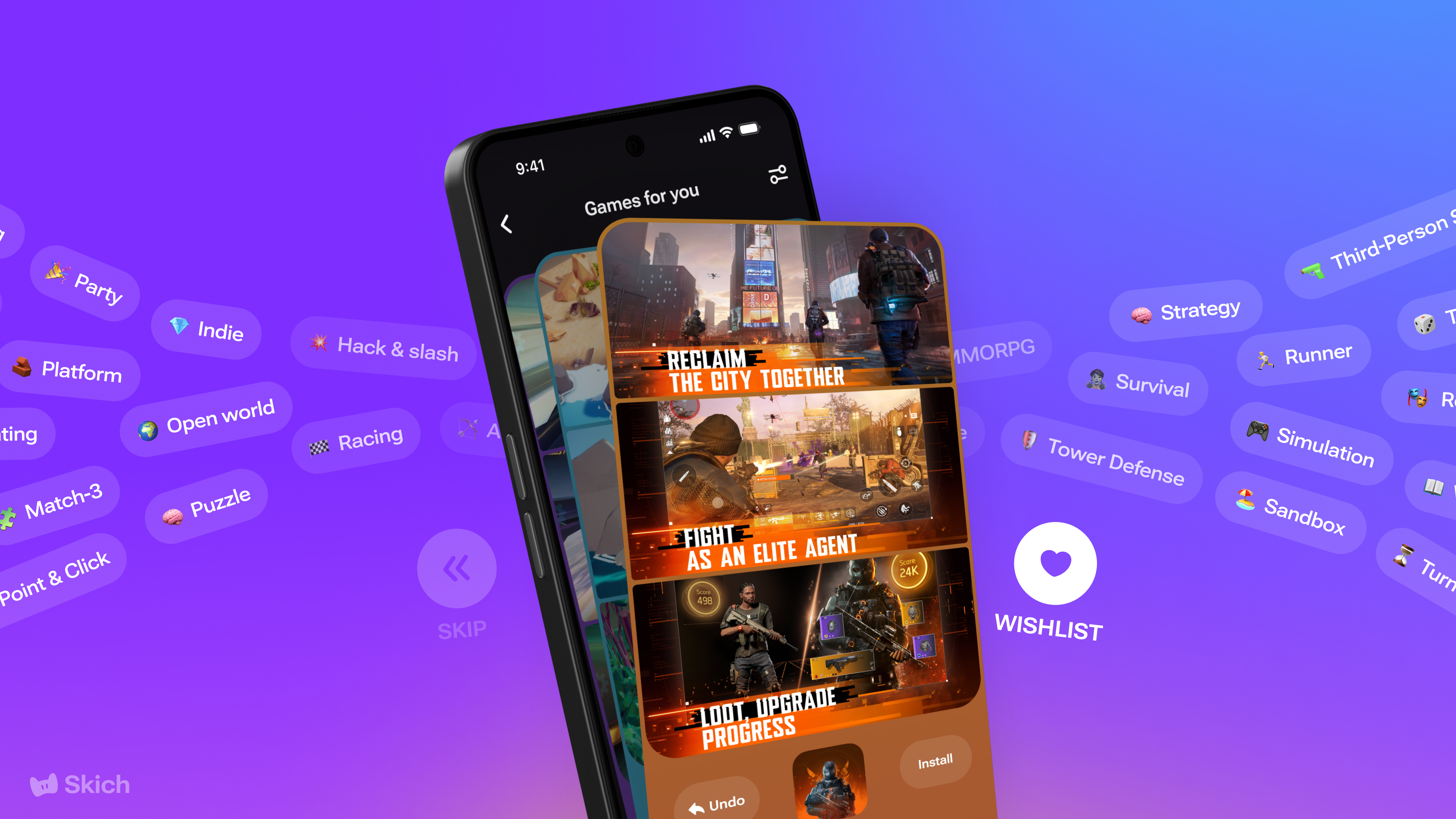
Mobile gaming has grown far past the roughly 20 genres the App Store recognizes. As AI makes games faster and cheaper to build, that number will climb, and the discovery problem climbs with it.
At Skich, we track more than 280 genres. Here is the part that surprised even us.
Players already know what they like. The old stores just have no way to show it to them. That gap is the real opportunity, and it points to a part of the market almost everyone ignores.
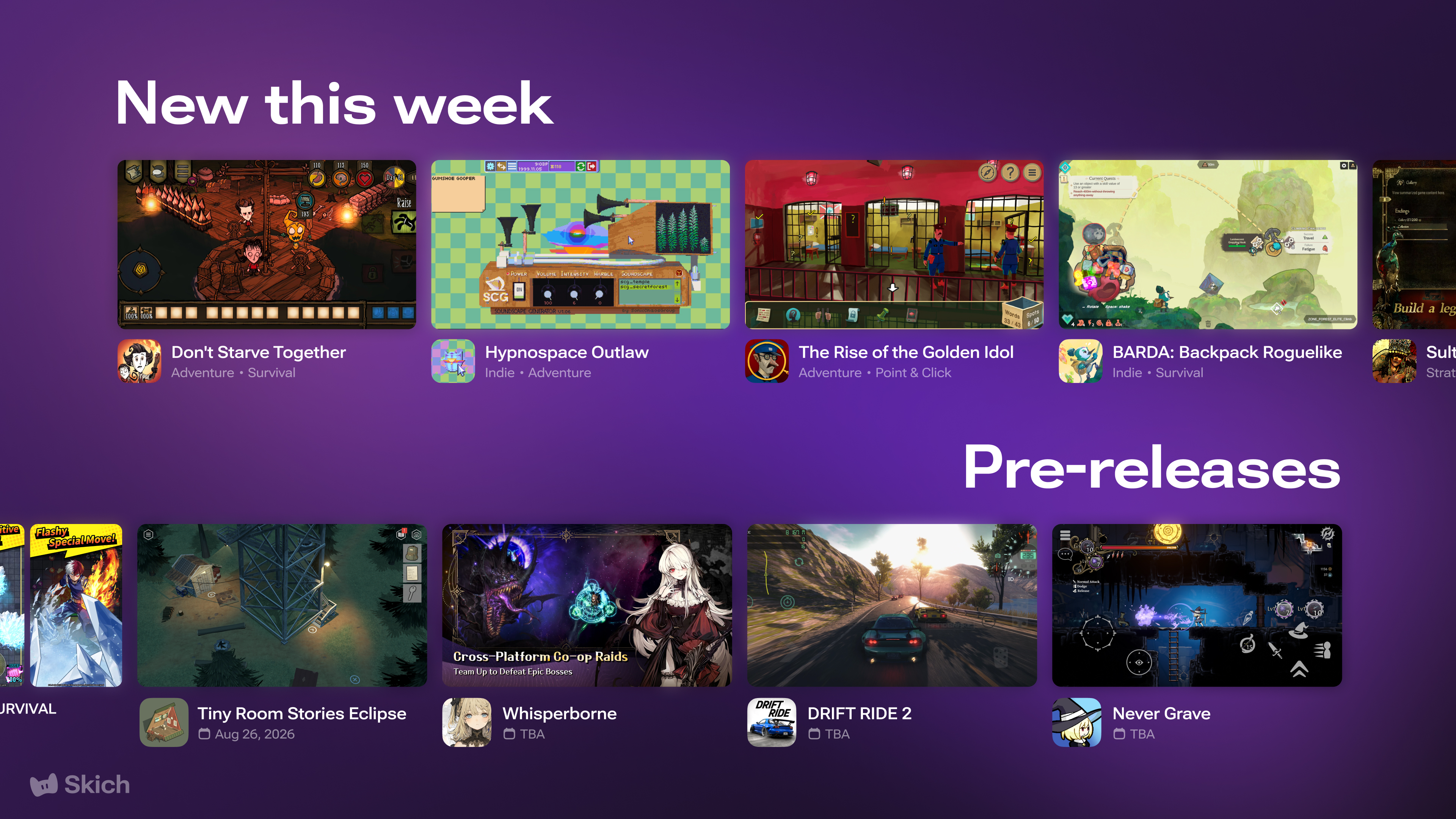
I'm talking about the pre-release window. On our homepage, two sections draw the most interest: one is New This Week, where players find games that just launched. The other is Pre-releases, where players follow upcoming titles and sign up to hear the moment they go live. In the mid-core and hardcore space we focus on, players love this. They want to follow a game before launch, build anticipation, and feel part of the journey.
PC and console studios have understood this for years. They invest in brand building and pre-launch campaigns as a matter of course. Mobile has been slow to do the same, and I think that is a mistake worth fixing.
Matching the right player with the right game is the core of what we do. On top of that, we built tools meant to help a game spread on its own.
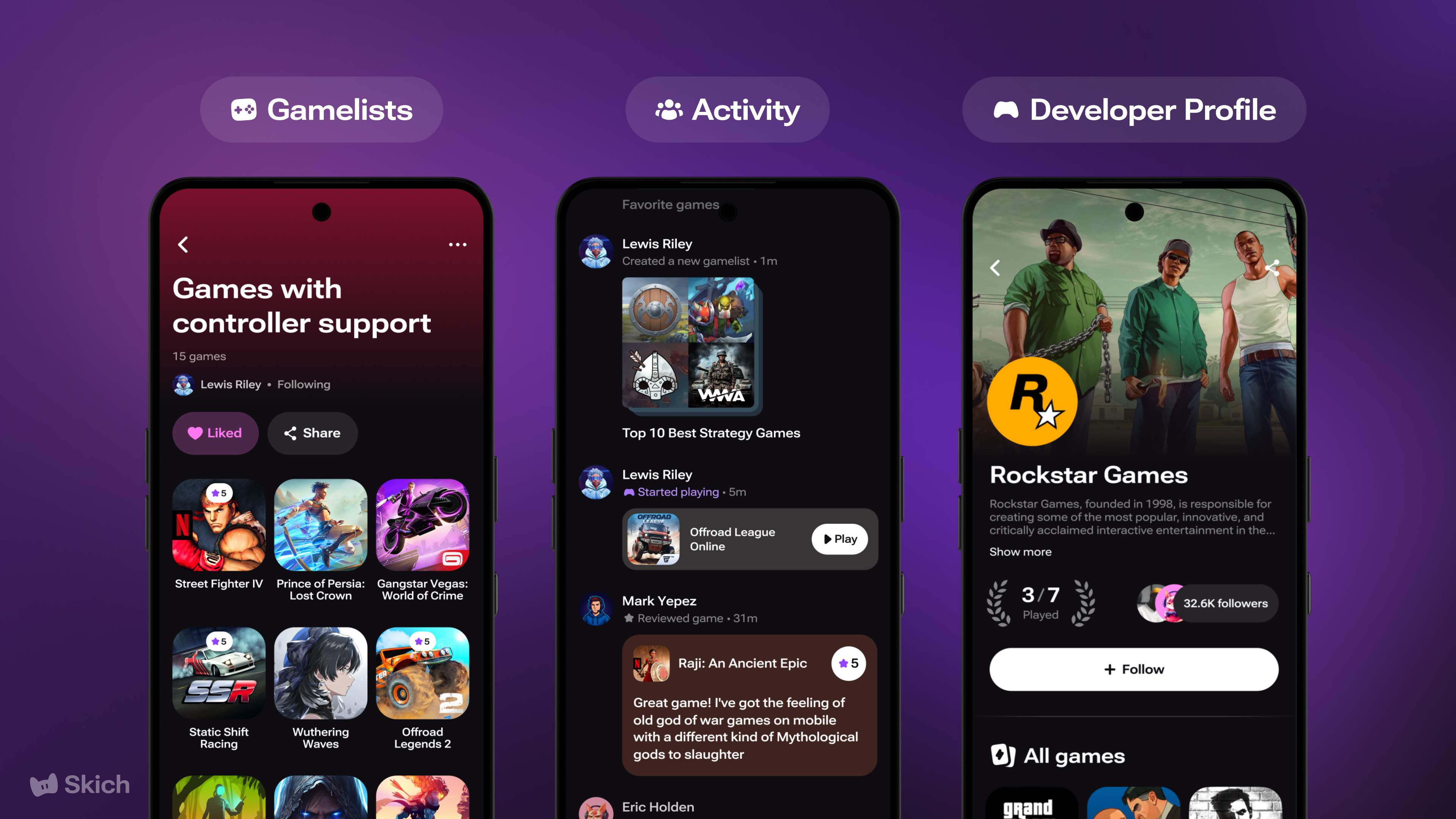
Two of them do most of the work. Game Lists let players collect and share the games they love. Activity shows a player's friends what they are doing, whether they start a game, write a review, add it to a wishlist, or drop it into a list. Every one of those actions becomes a small recommendation to someone who trusts them.
Then there are developer profiles; my favorite feature.
That is real brand awareness for developers, something the mobile market rarely offers.
The traditional store model has always bothered me on one point. You pay the same commission whether the store found your player or you did. That never felt fair.
So we do it differently. We charge a 15 percent commission only on the organic traffic we send you. If we did not help you find that player, we don't take a cut. We are also building a way for developers to bring their own audience into Skich, and we will share the terms for that once it is ready.
Right now, two groups are moving fastest toward alternative distribution. Large publishers want new channels they can own. Indie developers want organic traffic they cannot buy their way to. Mid-size studios are the most cautious so far, which I understand, though I suspect that will change as the path gets easier.
And it is getting easier. Distribution has always been our hardest problem, because installing a store through a website is strange behavior for most people, and Android's security warnings did not help. That is changing too. Alongside the US launch inside Google Play, Android has announced a simpler way to install alternative stores from websites worldwide. We have been getting ready for this moment for a while.
Our website already brings in more than 100,000 new visitors every month, and that number keeps growing.
I think we are about to see a market with dozens, maybe hundreds, of alternative stores, similar to what happened in China. The ones that last will not try to be everything to everyone. They will win by owning a specific niche and audience. For us, that means becoming the store mid-core and hardcore players trust, with games, developers, and features they cannot find anywhere else.
None of this works alone, though. Opening a new channel is one thing. Handling payments, taxes, and the operational work behind direct distribution is another, and it is not where most studios want to spend their energy.
This struggle is why we teamed up with Xsolla. We help developers step into direct distribution, while Xsolla handles the underlying payment processing and infrastructure. The goal was never to add more work to your plate. It was to give your game all the things it needs to reach players and grow, without asking you to rebuild your business to get there.
The gates are opening. For the first time in a long time, that is genuinely good news for the people who make games.
Interviews, copywriting, editing, and article publication prepared by Kirill Tokarev, Lisa Sirlin-Hall, Viktoria Steshina, and David Jagneaux.
Learn how Xsolla’s video game monetization experts can help accelerate your business. Xsolla is a global video game commerce company with a robust set of tools and services designed specifically for the game industry
By submitting this form, you consent to receive the digital guide.You can unsubscribe at any time. For more information, please read our Privacy Policy.
Related articles
GBI
Your data might lie, but your players won't.
GBI
For years, two companies decided which mobile games players ever saw. That is starting to change, and it changes what your next launch can look like.
GBI
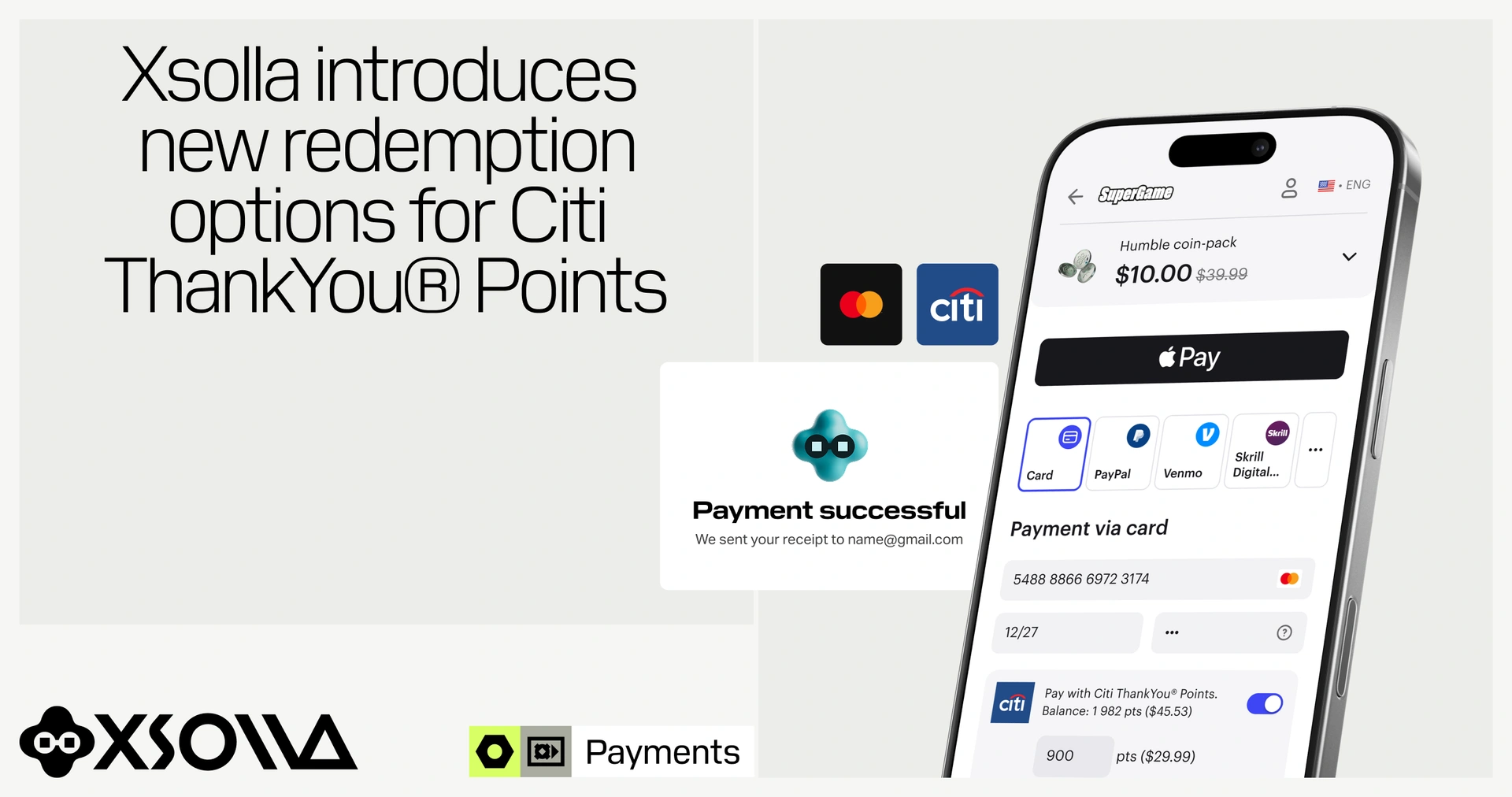
Eligible Citi Mastercard cardmembers can now use Citi ThankYou® Points on video games and in-game digital goods. Studios already using Xsolla Payments can offer points as a payment option without building or maintaining a separate loyalty integration.
GBI
Shawn Layden is building a financing vehicle for stranded AA games. The teams keep their IP. The hard part is that nobody knows how to underwrite a video game.
-1920x1080.webp)
GBI
The calm game launch is never luck; it's the result of work you do long before release day.
-1920x1080.webp)
GBI
Adikteev's Emilien Eychenne knows that your biggest game growth lever isn't new installs; it's learning to spot churn early and win mobile players back for good.
-1920x1080.webp)
GBI
Xsolla research across Asia reveals a consistent pattern: players do not abandon carts because of price; they leave because the checkout feels foreign. Here is what it takes to earn trust at the moment of purchase.
-1920x1072.webp)
GBI
This is where you'll find deep-dive resources and interviews for everything you need to know about the parts of the industry nobody teaches.
GBI
Distribution got democratized. Discoverability got concentrated. GAM3S.GG Head of Operations Eliza Crichton-Stuart speaks out on what that gap means for players and developers, and how to close it.
GBI
MUD1 co-creator Richard Bartle reflects on the origins of virtual worlds, the player-developer contract, free-to-play, pay-to-win, Web3, and why lasting MMOs need purpose before monetization.
GBI
After 15 years and 170M downloads of Magic Jigsaw Puzzles, ZiMAD's Chief BD Officer shares how to protect player trust and lead through fast change.
GBI
GDAI's Program Director, Machaiah Kalengada, dives into the unique combination of India's 550 million young gamers and an industry ready to build its own IP. He reveals what's really happening in India's booming game development scene.
GBI
Gaggle Studios reveals how they built a party gaming hit and what the game industry can learn from Goose Goose Duck's trajectory.
GBI
Andrew Naicker of Skystone Games has spent 14 years watching the "ship faster, market louder" playbook fail. Here's what he actually builds and what it takes to launch in 2026.
GBI
Entertainment licensing isn't a AAA-only game anymore. Xsolla Agency global IP licensing advisor Mark Caplan discusses how mobile studios are sitting on one of the best growth levers in the industry and most aren't using it. Here's what developers get wrong and how the right partner changes everything.
GBI
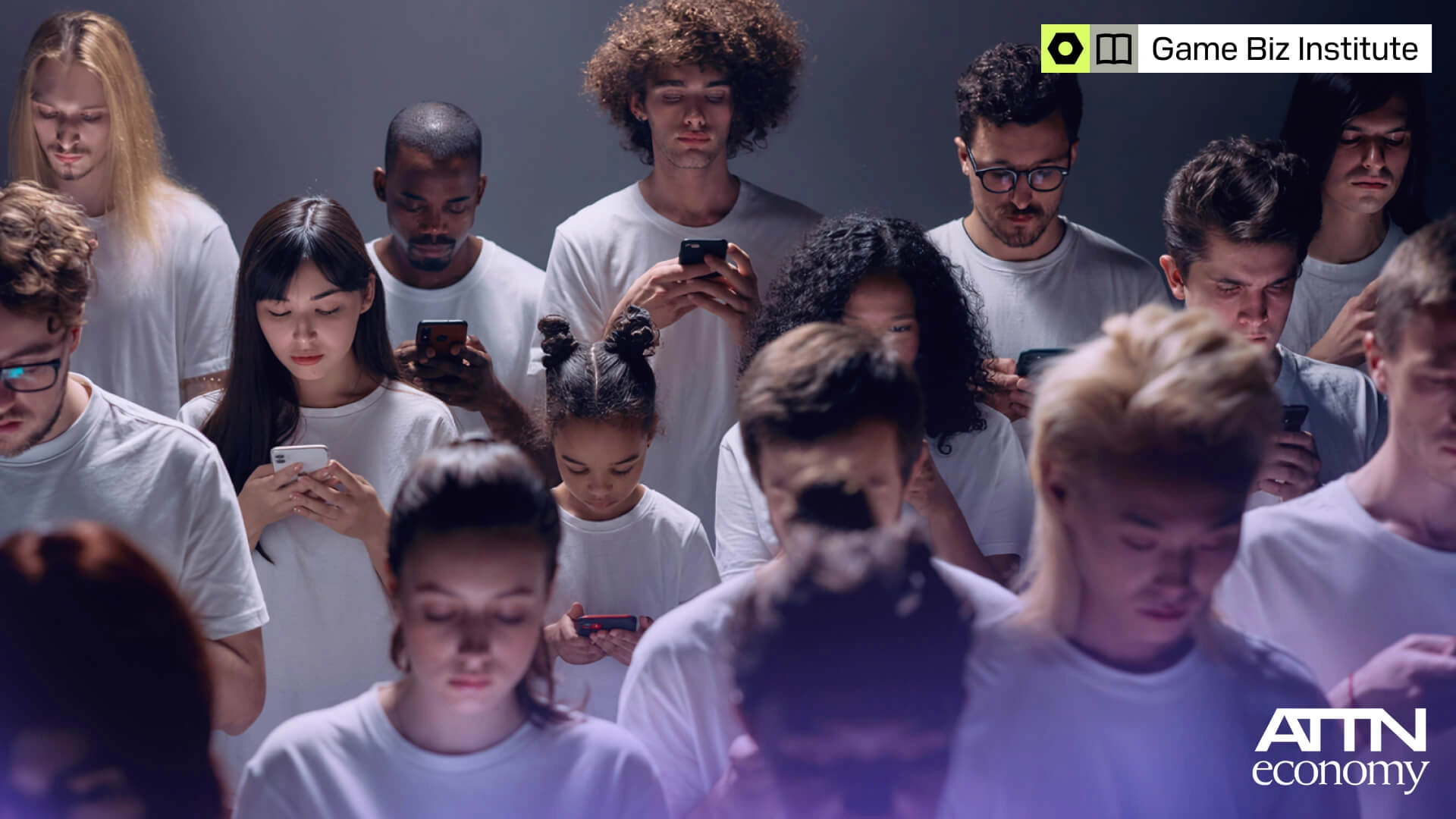
Players have more to watch, play, and scroll through than ever. They have less time to give any of it. Lexi Sydow, founder of The ATTN Economy, explains why that gap is the real battleground for every game in 2026.
GBI
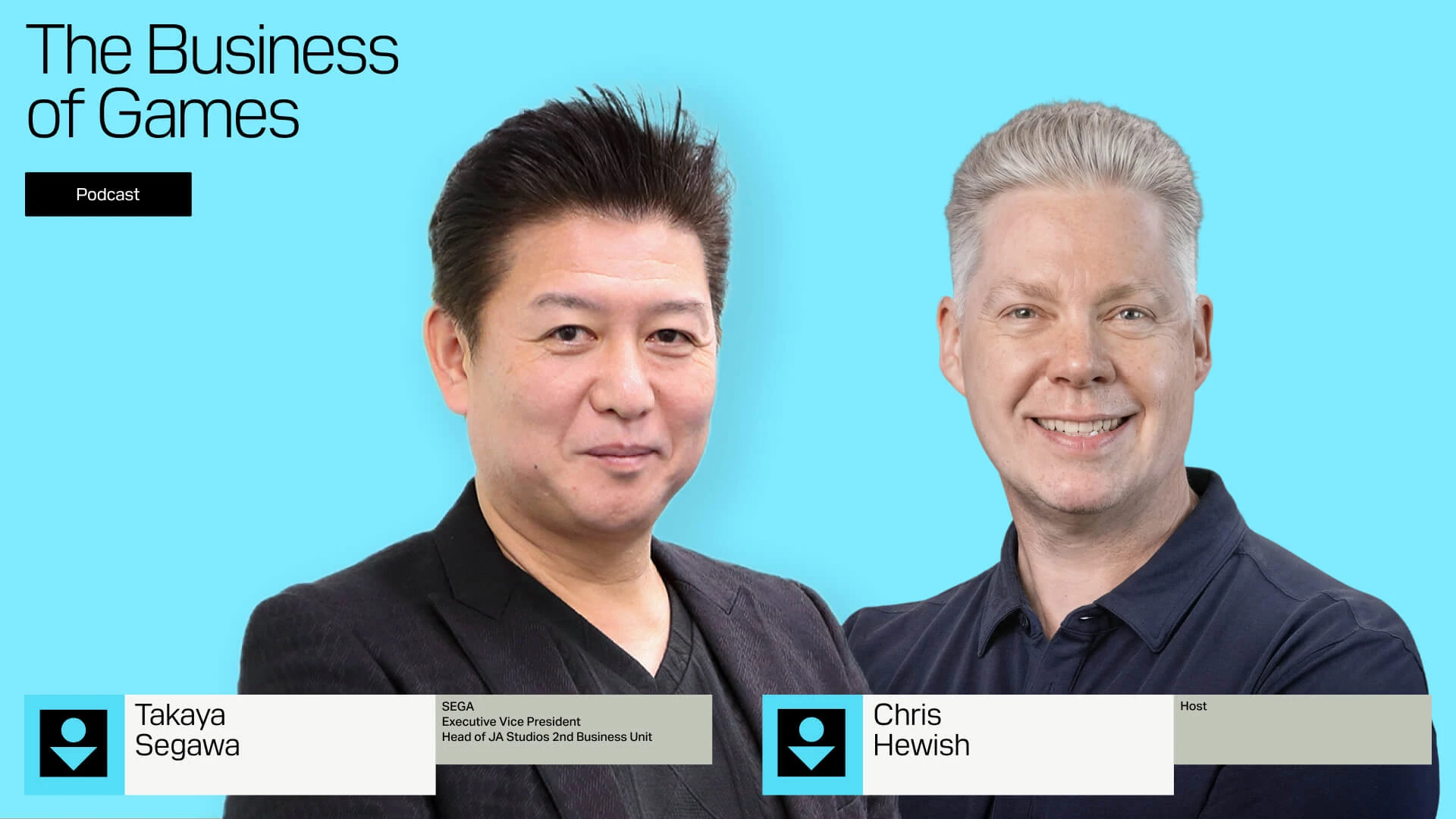
Sega's head of development studios on LiveOps, global growth, and going direct to players.


Are you a game industry expert with insights that inform? Help us grow Game Business Institute and earn revenue for contributions that have direct impact.
Game Biz Institute
The game industry's most extensive library of business insights.
© 2006 — 2026 Xsolla (USA), Inc.
-1-400x400-400x400.webp)
-808x789.webp)


-501x501.webp)
-500x500.webp)


-800x800.webp)
-2-1920x1920.webp)